Digital Visiting Card vs Traditional Business Card: Which One Is Better for Professionals?
Making a strong first impression is essential in today’s competitive business environment. Whether you are an entrepreneur, consultant, sales representative, freelancer, or business owner, sharing your contact information professionally can help you build valuable business relationships.
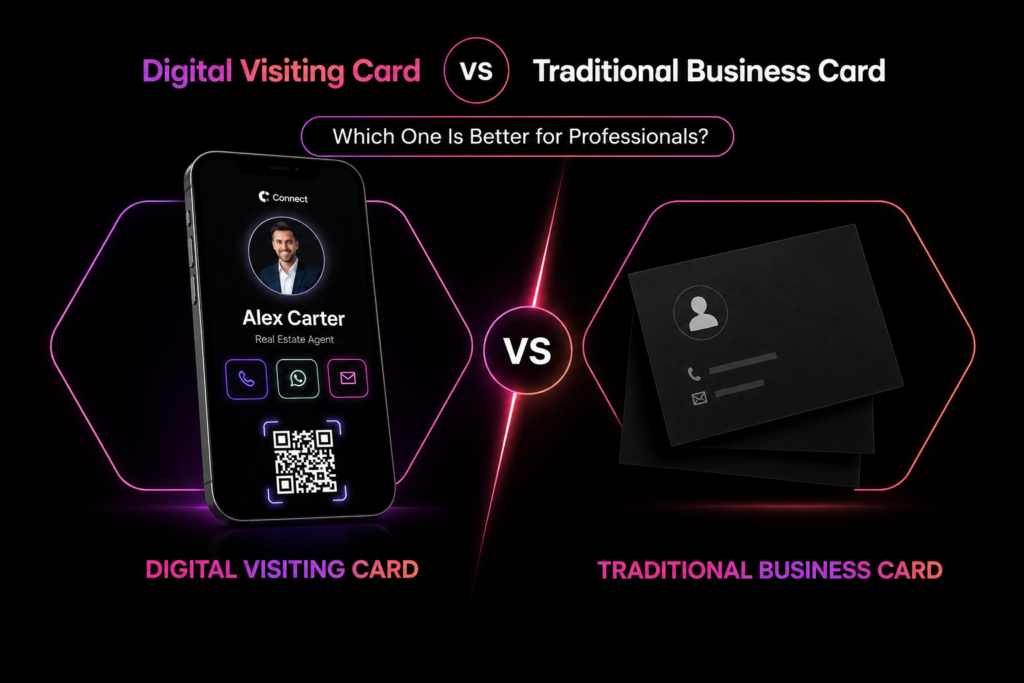
For years, traditional business cards have been a popular networking tool. However, technology has introduced a smarter alternative: digital visiting cards. Professionals can now share their contact details, business information, social media profiles, and website links through a single digital card. But when comparing a digital visiting card vs traditional business card, which option is better for modern professionals?
Traditional business cards offer a physical and personal networking experience, while digital visiting cards provide convenience, flexibility, easy sharing, and the ability to update information without printing new cards. When comparing a digital visiting card vs traditional business card, professionals should consider convenience, cost, accessibility, and networking opportunities. Both options help people exchange contact information, but digital solutions offer additional flexibility for modern business communication. In this guide, we will compare both options, explore their advantages and disadvantages, and help you decide which business card solution is right for your professional needs.
What Is a Traditional Business Card?
A traditional business card is a printed card containing essential professional and business information. It is commonly exchanged during meetings, conferences, networking events, and client interactions.
A typical traditional business card includes:
- Full name and professional designation
- Company or business name
- Phone number and email address
- Office or business address
- Website URL
- Company logo and branding
Traditional cards are usually printed on paper or premium cardstock in different sizes, designs, and finishes. They remain useful for face-to-face networking because people can physically exchange cards and keep them for future reference. However, traditional cards have some limitations. If your phone number, email address, job title, or company information changes, you may need to print a new batch.
What Is a Digital Visiting Card?
A digital visiting card is an online version of a traditional business card. It allows professionals to share their contact information and business profile electronically. Instead of carrying printed cards, you can share your digital visiting card through a QR code, link, messaging application, email, or other digital platforms.
A digital visiting card can include:
- Name, profile picture, and designation
- Business or company information
- Contact numbers and email addresses
- Website and social media links
- Business address and location
- Professional introduction
- Other relevant business information
With a digital card, people can access your professional details using their smartphones without needing a physical card. It is a convenient solution for entrepreneurs, consultants, freelancers, sales teams, and professionals who regularly connect with new clients.
Digital Visiting Card vs Traditional Business Card: Key Differences
Understanding the difference between a digital visiting card vs traditional business card can help entrepreneurs and business owners choose a suitable networking solution. While printed cards offer a physical experience, online cards make sharing professional information easier.
| Comparison | Digital Visiting Card | Traditional Business Card |
|---|---|---|
| Format | Online digital profile | Printed physical card |
| Sharing | Link, QR code, messaging apps | Physical exchange |
| Printing Cost | No printing required | Requires printing |
| Updating Details | Can be updated online | Requires reprinting |
| Accessibility | Accessible through supported devices and internet | Available physically |
| Contact Saving | Can support direct contact saving | Manual contact entry |
| Website Links | Clickable website links | Printed website URL |
| Social Media | Can include clickable profiles | Usually printed as text |
| Environmental Impact | Reduces paper use | Uses paper and printing materials |
| Professional Branding | Flexible digital presentation | Physical design and print quality |
Both options have their own benefits. However, digital cards offer several practical advantages for professionals who want convenient and flexible networking.
7 Benefits of Digital Visiting Cards for Professionals
A digital visiting card is more than an online version of a printed card. It provides useful features that can improve how professionals introduce themselves and connect with potential customers. One important reason professionals compare a digital visiting card vs traditional business card is the ability to update contact information. Digital profiles can be edited without ordering another batch of printed cards, making them convenient for growing businesses.
1. Easy and Instant Sharing
One of the biggest advantages of a digital visiting card is convenience. You do not need to carry a stack of printed cards everywhere. You can share your professional profile through a link or QR code whenever you meet a potential client. QR codes make it easier to connect physical networking materials with online profiles. Learn more about QR Code technology For example, a consultant attending a business conference can share a digital card through WhatsApp or email within seconds. This makes networking faster and more convenient.
2. Save Money on Printing
Traditional business cards require regular printing expenses. Businesses may need to order hundreds of cards, particularly when employees join or contact information changes. Digital visiting cards eliminate the need for repeated printing. You can create your digital profile and share it electronically without worrying about printing costs for every networking opportunity. For startups, freelancers, and small business owners, this can be a practical way to reduce business expenses.
3. Update Your Information Anytime
Imagine changing your phone number, business address, company designation, or website. With traditional cards, you may need to print a completely new batch. A digital visiting card makes information management easier. Depending on the platform, you can update your profile details without distributing a new printed card. This helps ensure that people accessing your updated profile can find your latest business information.
4. Include Clickable Contact Information
Traditional business cards display information, but users generally need to enter the details manually. Digital cards can make this process easier with clickable contact options. Depending on the available features, visitors may be able to:
- Call your business directly.
- Send you an email.
- Visit your website.
- Open your social media profiles.
- View your business location.
- Save your contact information.
These features help reduce the steps required to connect with you.
5. Improve Your Professional Branding
Your business card represents your professional identity. A digital visiting card gives you additional opportunities to present your business information in an organised and attractive format. You can include your professional introduction, company branding, website, social media accounts, and other relevant details. This helps potential clients understand your services and discover more about your business.
6. Share Your Card Anywhere
Digital visiting cards are useful for both online and offline networking.
You can share your profile through:
- WhatsApp messages
- Email signatures
- LinkedIn profiles
- Business websites
- Social media platforms
- QR codes at networking events
- Online meetings and presentations
This flexibility makes digital cards particularly useful for professionals who connect with clients across different locations.
7. Reduce Paper Consumption
Traditional business cards require paper, ink, and printing materials. Digital visiting cards reduce the need for printed business cards by allowing professionals to share their details electronically. For businesses looking to adopt more environmentally conscious practices, digital networking is a useful alternative.
Advantages of Traditional Business Cards
Although digital networking is becoming increasingly popular, traditional business cards still have some important advantages.
1. Personal Networking Experience
Exchanging physical business cards can create a personal connection during face-to-face meetings. It provides a simple and familiar way to introduce yourself to potential customers, partners, and business associates.
2. No Internet Required
Traditional business cards do not depend on an internet connection, smartphone, or digital platform. Recipients can access your printed contact information whenever they have the physical card.
3. Creative Physical Designs
Printed business cards offer different materials, textures, finishes, and shapes. Professionals can use premium printing styles to communicate their brand identity and create a memorable physical impression.
4. Useful at Traditional Networking Events
Physical cards remain useful at conferences, trade shows, exhibitions, and business meetings where participants regularly exchange contact information. For these situations, printed cards can still be an effective networking tool.
Disadvantages of Digital and Traditional Business Cards
Before choosing either option, it is important to understand their limitations.
Digital Visiting Card Limitations
- Access may depend on an internet connection for online profiles.
- Some recipients may be unfamiliar with digital cards.
- The quality of the experience depends on the platform.
- Users should choose a reliable platform to protect their business information.
- Some features may require a paid subscription.
Traditional Business Card Limitations
- Printing creates recurring expenses.
- Contact details become outdated when information changes.
- Physical cards can be lost or damaged.
- They have limited space for business information.
- Sharing requires physical distribution.
- Printed website and social media addresses are not directly clickable.
For professionals who frequently update their business details or network online, digital cards can provide greater flexibility.
Which Professionals Should Use Digital Visiting Cards?
The choice between a digital visiting card vs traditional business card also depends on your target audience. Professionals who frequently communicate online may benefit from digital profiles, while those attending traditional networking events may still prefer printed cards.
Here are some examples:
Entrepreneurs and Business Owners
Entrepreneurs regularly meet potential investors, partners, suppliers, and customers. A digital visiting card helps them share company details and contact information quickly.
Freelancers and Consultants
Freelancers and consultants depend on professional networking to find new clients. A digital card can showcase their services, portfolio website, contact details, and professional profiles in one place.
Sales Representatives
Sales professionals interact with multiple prospects every day. Sharing a digital card makes it easier for potential customers to save contact information and reach out later.
Real Estate Agents
Real estate professionals can use digital cards to share their contact information, business profiles, website links, and social media accounts with prospective buyers and sellers.
Marketing Professionals
Digital marketing specialists can include their website, portfolio, LinkedIn profile, and other professional details to help potential clients discover their expertise.
Doctors, Lawyers, and Other Service Professionals
Service professionals can share their professional contact details and relevant business information through a digital profile, making communication more convenient for clients.
Digital Visiting Card vs Traditional Business Card: Which One Should You Choose?
The right option depends on your networking style, professional requirements, and target audience.
Choose a traditional business card if:
- You regularly attend offline networking events.
- Your customers prefer physical contact information.
- You want a printed card with premium materials and finishes.
- You prefer exchanging physical cards during meetings.
Choose a digital visiting card if:
- You want to share contact details instantly.
- You regularly connect with customers online.
- You want to update your business information easily.
- You want to include clickable website and social media links.
- You want to reduce printing expenses.
- You want your professional profile accessible through a shareable link.
The smart approach: You do not necessarily need to abandon traditional business cards. You can use both options together.
For example, you can print a QR code on your traditional business card that directs people to your digital visiting card. This combines the personal experience of physical networking with the convenience of digital sharing.
How to Create a Digital Visiting Card in Minutes
Creating a digital visiting card does not have to be complicated. With Digital Card Creator, professionals can build an online business profile and share their professional details more conveniently.
Follow these general steps to get started:
Step 1: Open Digital Card Creator
Visit the Digital Card Creator platform and get started with creating your digital visiting card.
Step 2: Add Your Professional Details
Enter your name, designation, business name, contact information, and other relevant professional details.
Step 3: Add Your Business Information
Include your website, business address, social media profiles, and professional introduction to help people understand what you offer.
Step 4: Personalise Your Digital Profile
Organise your information to create a professional profile that represents your business identity.
Step 5: Create and Share Your Card
Once your digital profile is ready, create your card and share it through its available sharing options, such as a link or QR code.
Start building a professional online identity and make business networking easier.
Why Choose Digital Card Creator?
Digital Card Creator helps professionals move beyond traditional printed contact cards by creating a digital business presence. Whether you are a freelancer, entrepreneur, consultant, sales representative, or business owner, having an online professional profile can make sharing your information more convenient.
With Digital Card Creator, you can work towards:
- Creating a digital visiting card for your professional identity.
- Presenting your business and contact information online.
- Sharing your profile conveniently with potential customers.
- Making your business information easier to access.
- Building a more modern approach to professional networking.
Instead of relying only on printed cards, explore a digital solution that supports today’s connected business environment. Choosing the right digital solution can help you present your professional identity more effectively. Digital Card Creator makes it easier to bring your business information and contact details together in one shareable profile. Visit Digital Card Creator to explore how digital networking can support your professional growth.
Frequently Asked Questions (FAQs)
1. What is the difference between a digital visiting card and a traditional business card?
A digital visiting card is an online professional profile that can be shared through links or QR codes. A traditional business card is a printed card containing contact and business information.
2. Is a digital visiting card better than a traditional business card?
A digital visiting card is generally more convenient for instant sharing, updating information, and including clickable links. However, traditional cards remain useful for face-to-face networking. The best option depends on your professional needs.
3. Can I share my digital visiting card through WhatsApp?
Yes. If your digital card platform provides a shareable link, you can send it through WhatsApp, email, and other supported communication channels.
4. Can I update my digital visiting card details?
Yes. Platforms that support profile editing allow you to update information such as your phone number, email address, designation, and business details without printing new cards.
5. Are digital visiting cards suitable for small businesses?
Yes. Digital visiting cards can help small businesses, startups, freelancers, and independent professionals share their contact information and business profiles conveniently.
6. Do digital visiting cards replace printed business cards?
Not necessarily. Both options can work together. Professionals can use printed cards for offline networking and digital cards for convenient online sharing.
7. How can I create a free digital visiting card?
You can get started with Digital Card Creator to create your professional digital visiting card. Add your business details, organise your profile, and create your card for easier networking.
Final Thoughts: Make Your Professional Networking Smarter
Ultimately, choosing a digital visiting card vs traditional business card depends on how you connect with clients and business partners. A digital solution can complement traditional networking and help you maintain an accessible professional presence. When comparing a digital visiting card vs traditional business card, both options offer unique advantages.
Traditional business cards remain valuable for personal interactions, physical networking, and face-to-face business meetings. However, digital visiting cards provide greater flexibility when it comes to sharing contact information, updating details, and connecting with people online. For modern professionals, a digital visiting card is a convenient way to present their business identity and make networking easier. You do not have to wait for your next meeting or networking event to share your professional details.
Create your free digital visiting card with Digital Card Creator today and take the next step towards smarter business networking!